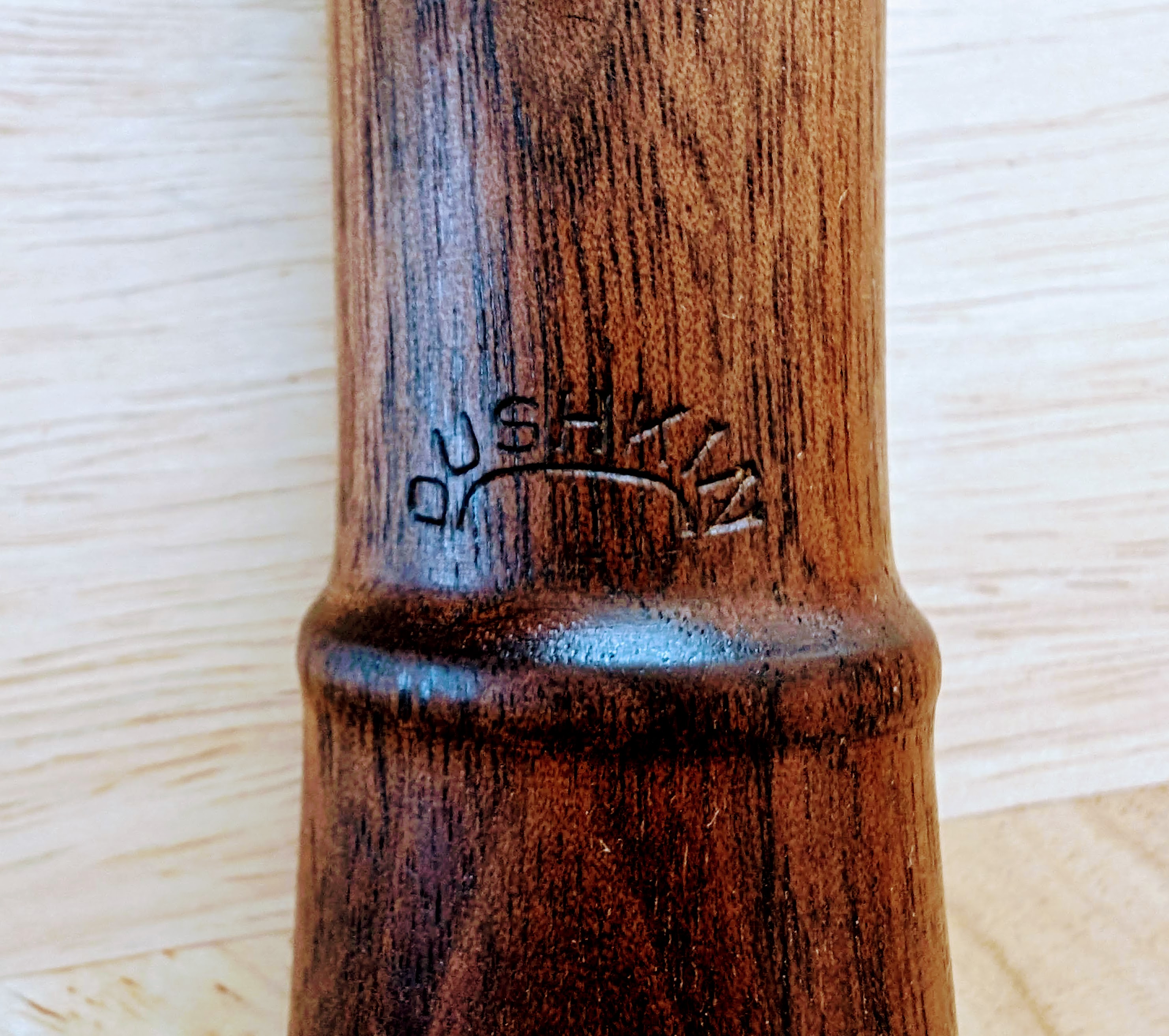
This is the second post I've made about Dushkin recorders.  There's not a lot of information about them on the web.  The first post has info I pieced together from what little I could find.  If you're interested, just look back a few posts.

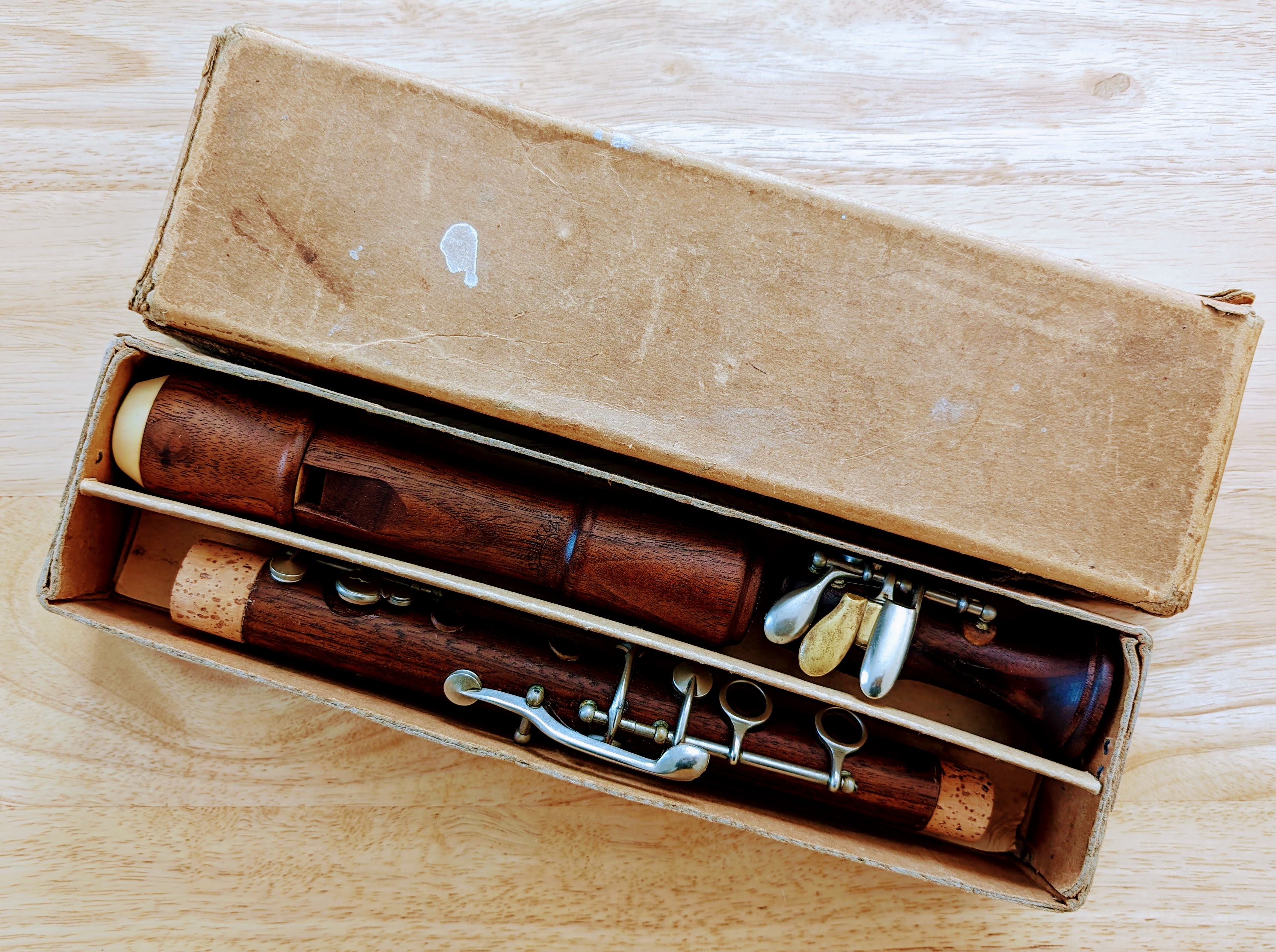
Last summer I was contacted by a woman named Sally who sent me pics of her Dushkin alto recorder, and wanted to know if I could help her learn how to play it.  The pics were small, but it was apparent it was a very unusual recorder.  It had keys, rings and raised toneholes.  Now, there are keyed recorders out there.  I've got a keyed soprano and tenor.  But usually, the keyed recorders are set up like a 6-key piccolo or 8-key flute.  I asked Sally to send some larger, more detailed photos.  She didn't have a musical background.  She had picked up the recorder many years ago somewhere in Ohio because she liked the look of it, and had just rediscovered it in a cabinet and decided to learn how to play it.  I wanted to help her out, but after looking at the pics, I wasn't sure how to do that.  I sent a 6-key piccolo fingering chart her way, but said it was not going to be an exact match and might be a little difficult to figure out.
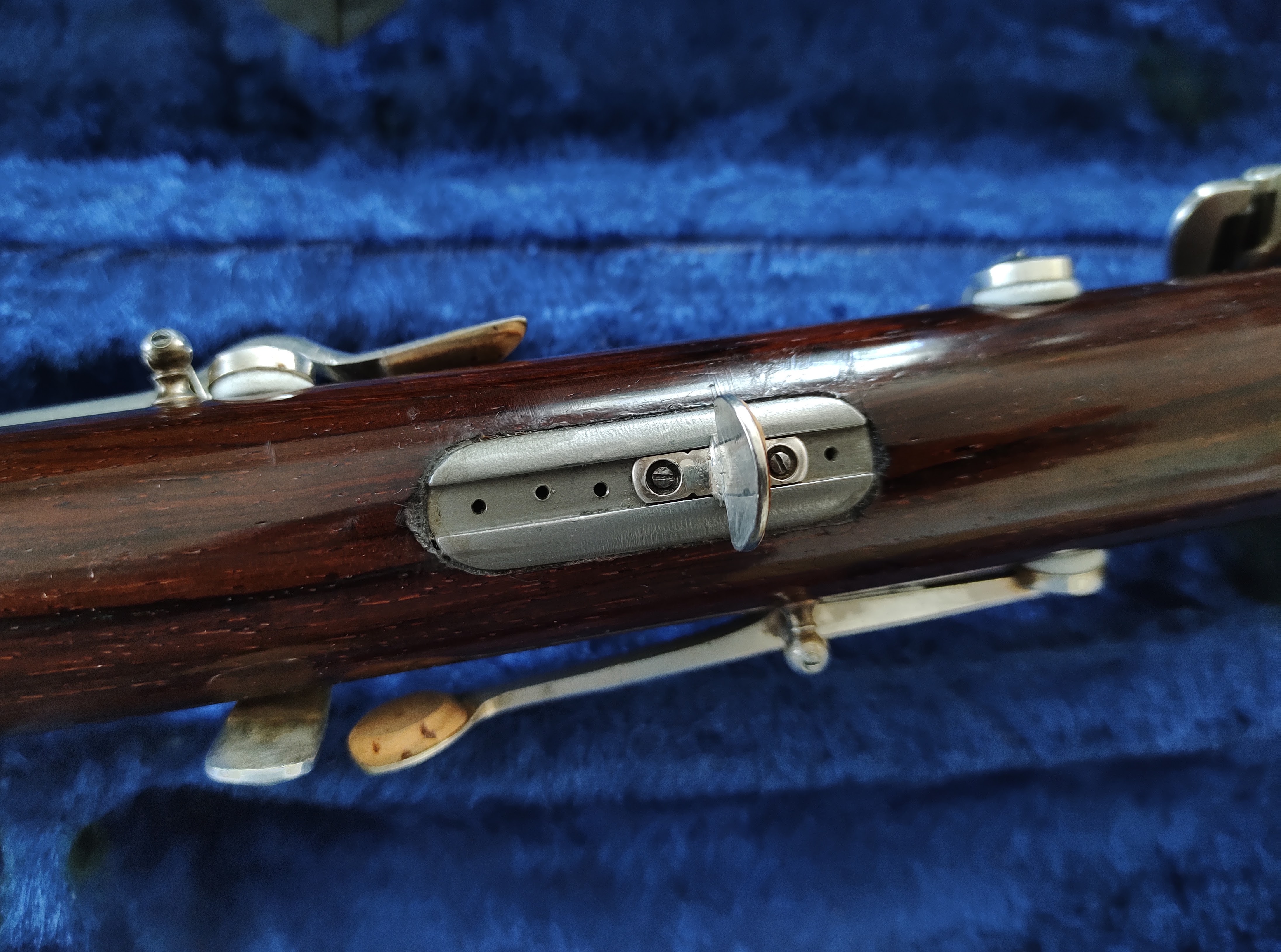
A few weeks went by, and Sally wrote again that it wasn't working out and wanted to know if I wanted to buy it.  So I sent an offer, and she accepted.  Once it arrived, and I could lay my hands on it, it was even odder than it looked in the photos.  And it needed work, which didn't really help Sally's endeavors.  The pads were shot, the G# key was cracked, there as a broken spring, etc.  So I took it to my repair tech for an overhaul and just got it back.   I'm still trying to figure out the fingerings.  It's kind of a cross between clarinet, oboe, 6-key piccolo and recorder.  The first two octaves play pretty well.  I think the third octave will probably play well too, after I figure out the fingerings (that uppermost key must do something).

I'm thinking this may be some kind of prototype?  I've scoured the net, but I can't find another one like it.  If anyone has an information, or has seen another one, let me know.  And thank you, Sally, for sending it my way.  I'm going to figure this thing out.  🙂
I've edited the video from my recent woodwind recital into individual piece videos and uploaded them as a playlist on YouTube. The live stream video is still available as well. There are seven videos in the playlist. The preview below shows the first piece on the program (and playlist).
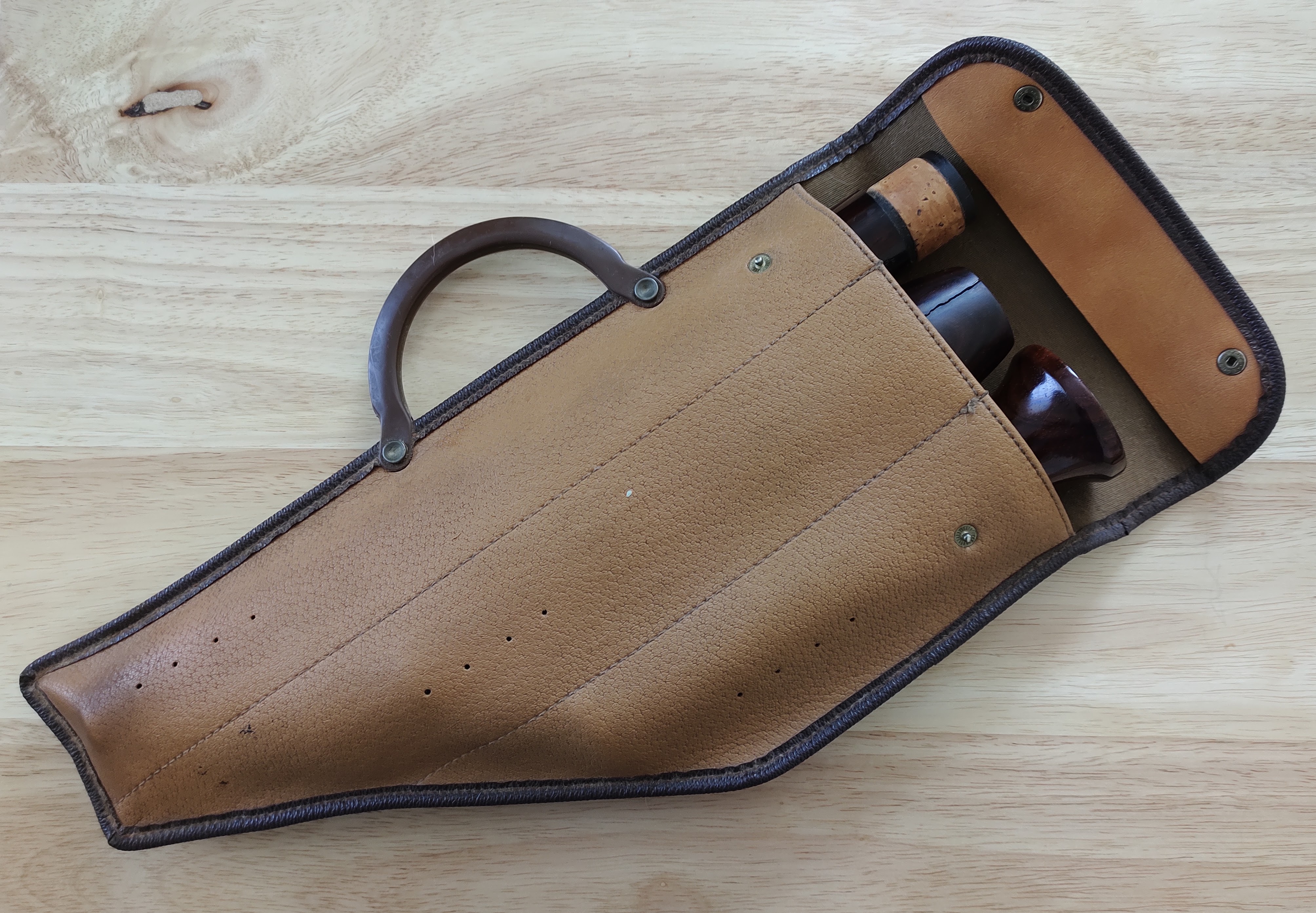
A few months ago, an unusual tenor recorder showed up on the big auction site. It was keyed (almost) like an eight-key flute. Other than "Made in Germany", there were apparently no other indications of a maker. The headjoint was clearly cracked in the photos. But it was unusual enough that I decided to place a bid, and surprisingly I won the auction. There was some competition, but I think the cracked head scared most people away. It was obviously a high-end recorder from back in the day....rosewood, keys, adjustable thumbrest, nice case.
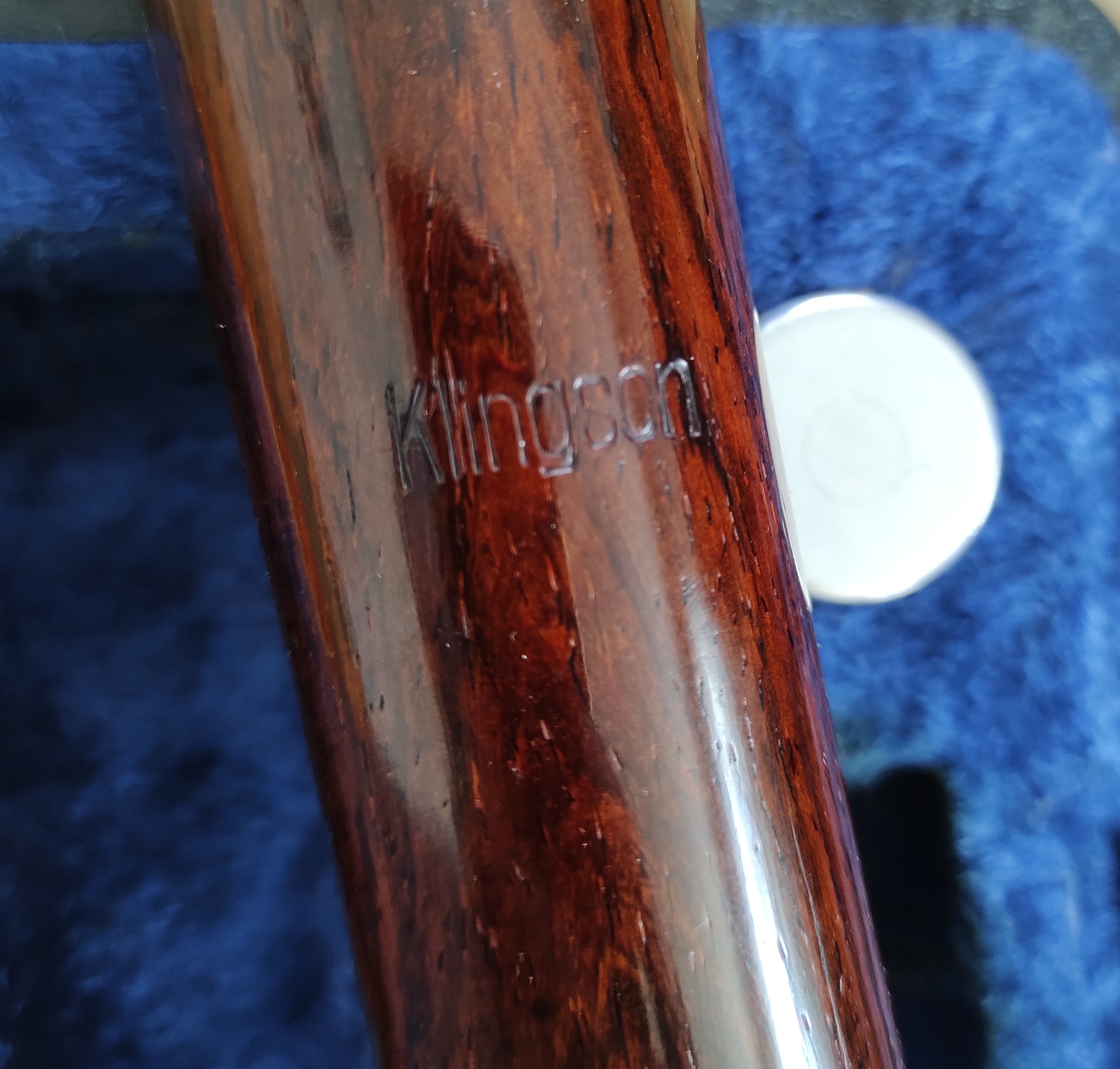
The night that I won the auction, the same seller listed another tenor recorder by the same maker. The headjoint and footjoint were shaped exactly the same and the wood looked the same. This time it was a "normal" one, and it had the name Klingson stamped on it. I knew I'd seen that name before, so after some quick research, I found Klingson was a brand name used by woodwind maker Karl Hammerschmidt. I could also see that the headjoint on this one seemed to be fine. Would that headjoint fit the keyed one, or were they possibly switched at some point? I decided I needed to try for that one as well. After waiting a week for the auction to end, I won that one too. Oddly, I was the only bidder. Normally a rosewood tenor would have a lot of interest.
When the first one showed up, the crack was indeed pretty bad. It also had two old cracks that had been "repaired" at some point. Cracks can always be fixed, but I was hopeful the other headjoint would fit when it arrived. A week later, the "normal" one arrived. The headjoint was a tad too small to fit on the keyed one. The normal one had a nice tone, but intonation was a bit wonky. The keyed one was going to have to be restored, and I had just saved a website of a recorder repairman that had been posted in a Facebook recorder page a few weeks prior.
So I contacted Werner John at TLC Recorder Optimization to see if he would take a look at it/them. We decided I should have the pads replaced locally since he would have to special order them, then send both recorders to him to do the rest of the restorations. Jon Goodman at Goodman Custom Woodwinds replaced the pads and polished the keys (they were so tarnished, I originally thought they were brass). Then off to Vermont they went. After receiving them, Werner called to discuss options. We decided since the headjoint cracks were quite extensive on the keyed one, and the normal one had a good headjoint, the best option would be to make the good one fit both recorders and leave the cracked one alone.
The recorders just arrived back from Werner. He did an amazing job! The good headjoint now fits both instruments perfectly. I can tell he did a lot of work on both instruments. They both play beautifully. The wood is just gorgeous on both as well. Pictures don't do them justice. And he was able to fix the wonky intonation on the normal one. He also worked out and included a fingering chart for the highest octave on the keyed recorder. I highly recommend Werner for any recorder repair you may need. And also thanks to Jon Goodman for his work on the keyed recorder as well.




 Brian Blauch - Clarinet/Woodwind Specialist