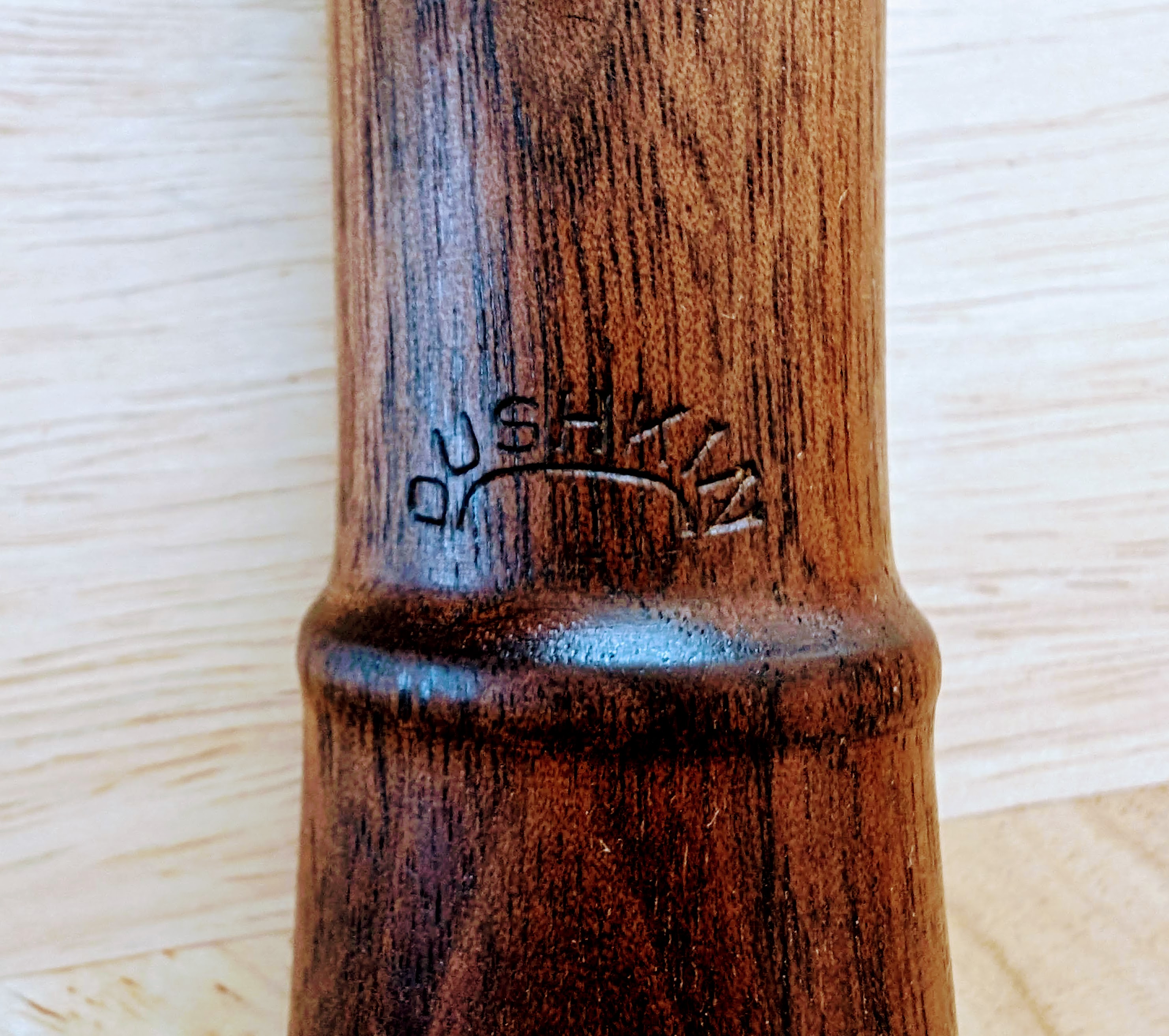
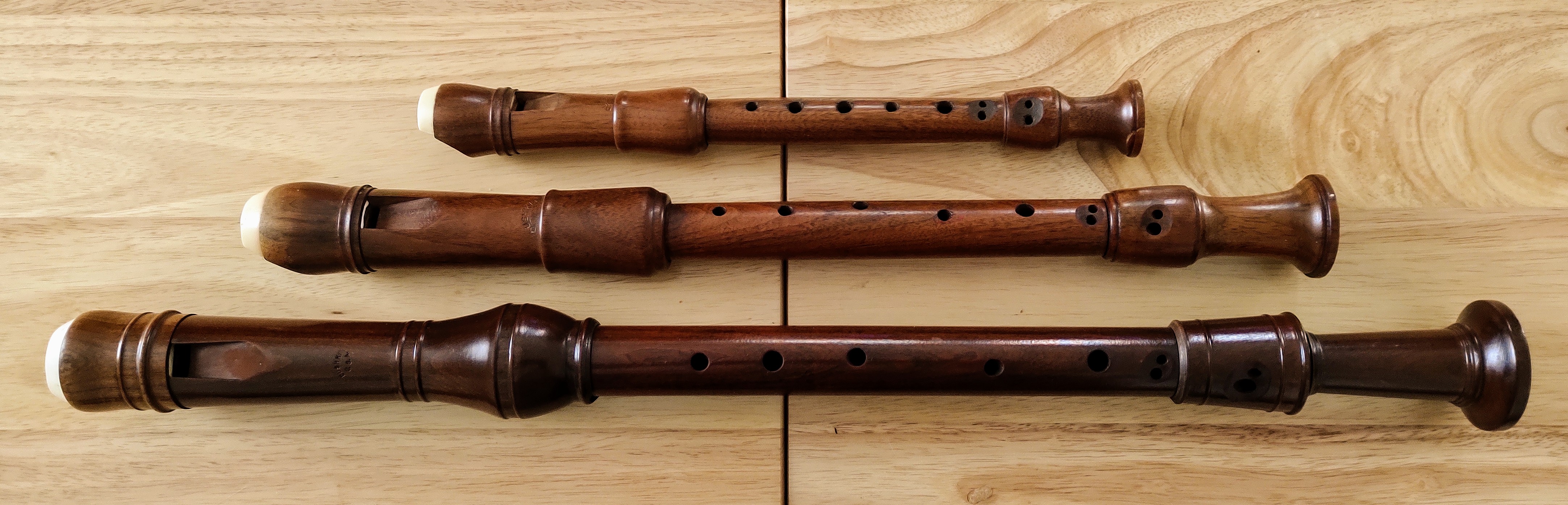
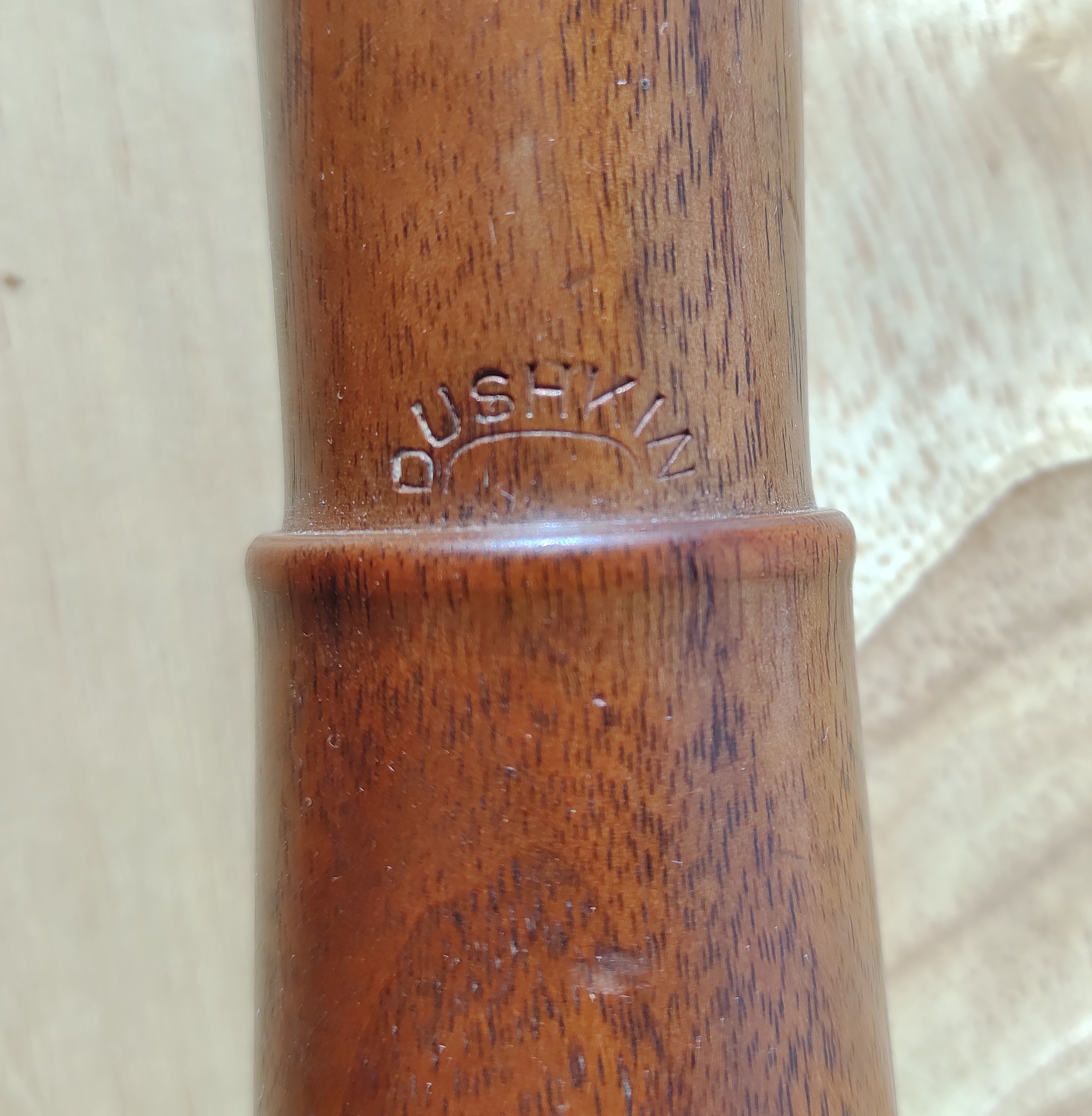
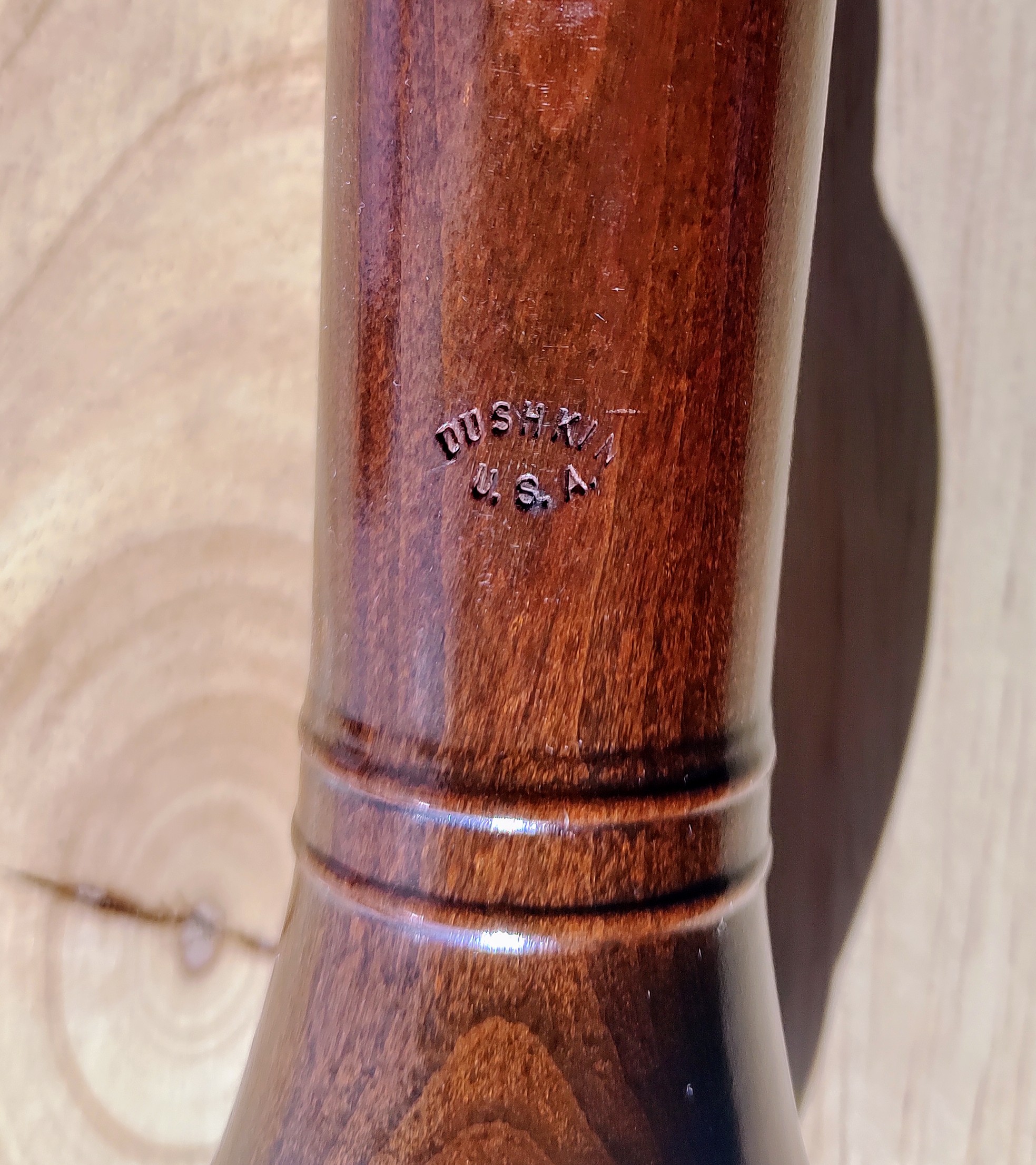
This is the second post I've made about Dushkin recorders.  There's not a lot of information about them on the web.  The first post has info I pieced together from what little I could find.  If you're interested, just look back a few posts.

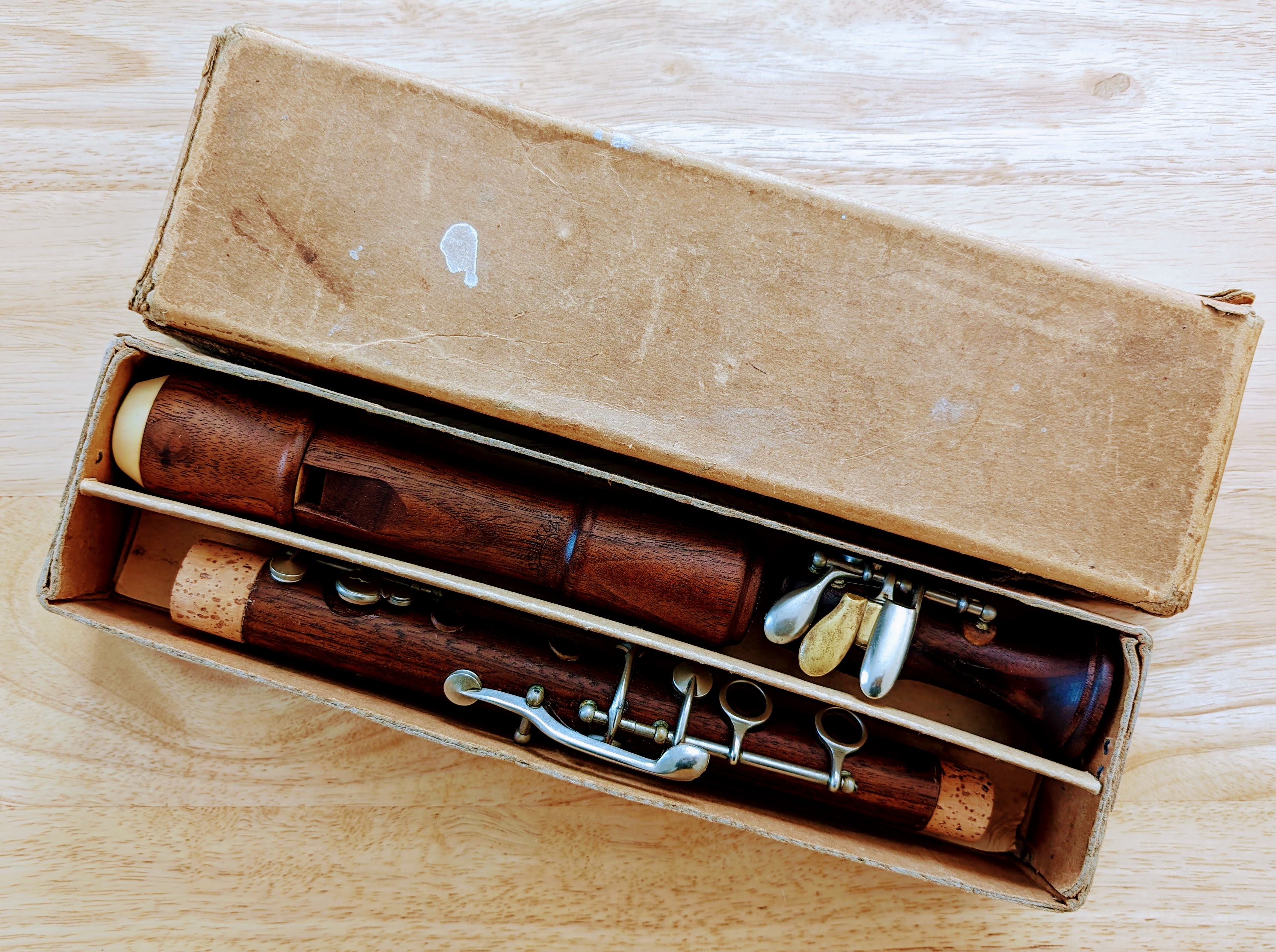
Last summer I was contacted by a woman named Sally who sent me pics of her Dushkin alto recorder, and wanted to know if I could help her learn how to play it.  The pics were small, but it was apparent it was a very unusual recorder.  It had keys, rings and raised toneholes.  Now, there are keyed recorders out there.  I've got a keyed soprano and tenor.  But usually, the keyed recorders are set up like a 6-key piccolo or 8-key flute.  I asked Sally to send some larger, more detailed photos.  She didn't have a musical background.  She had picked up the recorder many years ago somewhere in Ohio because she liked the look of it, and had just rediscovered it in a cabinet and decided to learn how to play it.  I wanted to help her out, but after looking at the pics, I wasn't sure how to do that.  I sent a 6-key piccolo fingering chart her way, but said it was not going to be an exact match and might be a little difficult to figure out.
A few weeks went by, and Sally wrote again that it wasn't working out and wanted to know if I wanted to buy it.  So I sent an offer, and she accepted.  Once it arrived, and I could lay my hands on it, it was even odder than it looked in the photos.  And it needed work, which didn't really help Sally's endeavors.  The pads were shot, the G# key was cracked, there as a broken spring, etc.  So I took it to my repair tech for an overhaul and just got it back.   I'm still trying to figure out the fingerings.  It's kind of a cross between clarinet, oboe, 6-key piccolo and recorder.  The first two octaves play pretty well.  I think the third octave will probably play well too, after I figure out the fingerings (that uppermost key must do something).

I'm thinking this may be some kind of prototype?  I've scoured the net, but I can't find another one like it.  If anyone has an information, or has seen another one, let me know.  And thank you, Sally, for sending it my way.  I'm going to figure this thing out.  🙂



 Brian Blauch - Clarinet/Woodwind Specialist