Most people think of recorders as coming in a couple of sizes. Soprano and alto are the most common. As with other woodwind instruments, there is a whole family of recorders. Typically they alternate between the keys of C and F (sopranino in F, soprano in C, alto in F, etc). Recorders also come in more obscure keys.....sopranos in Bb and A, altos in G, tenors in D. I've recently picked up a tenor in D (AKA voice flute).
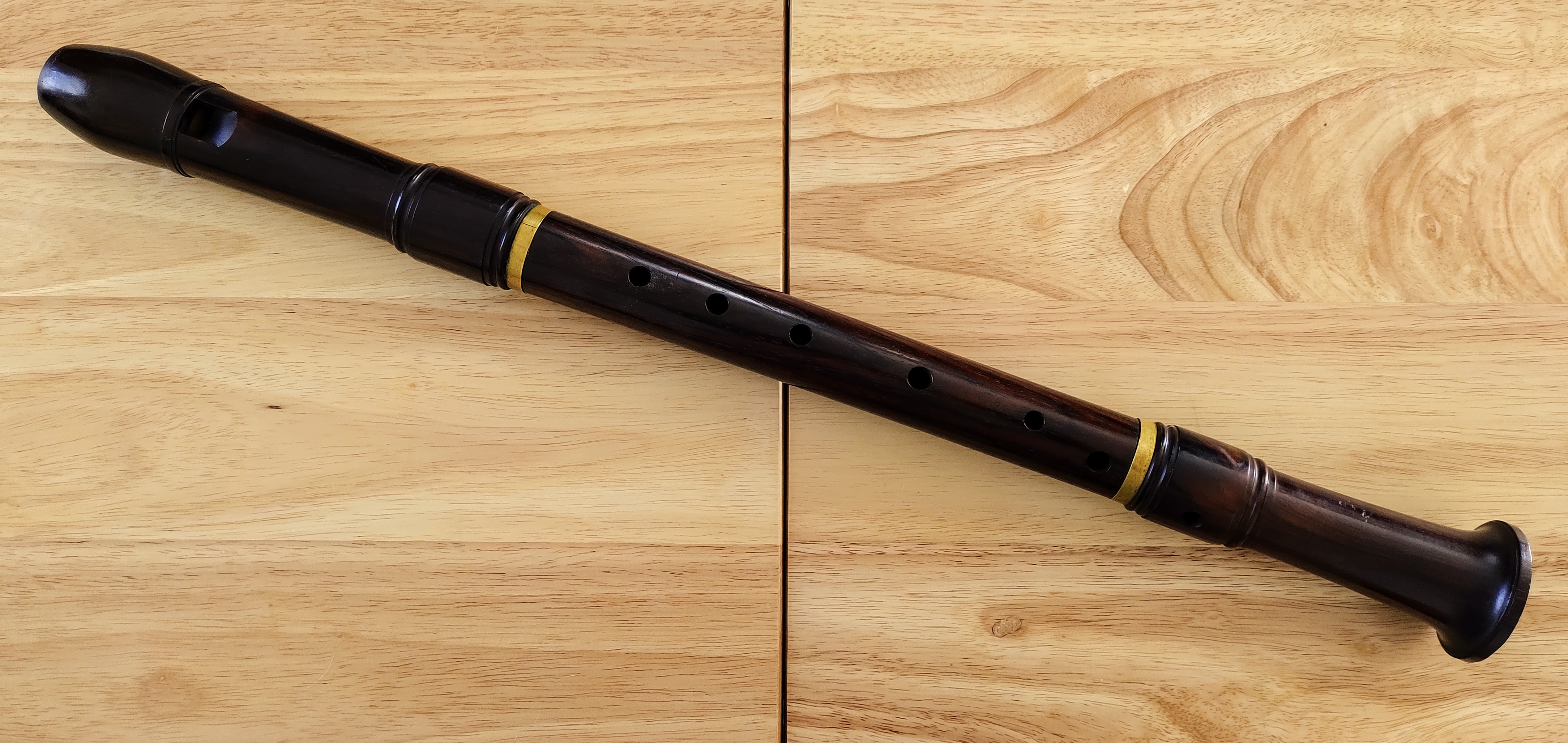
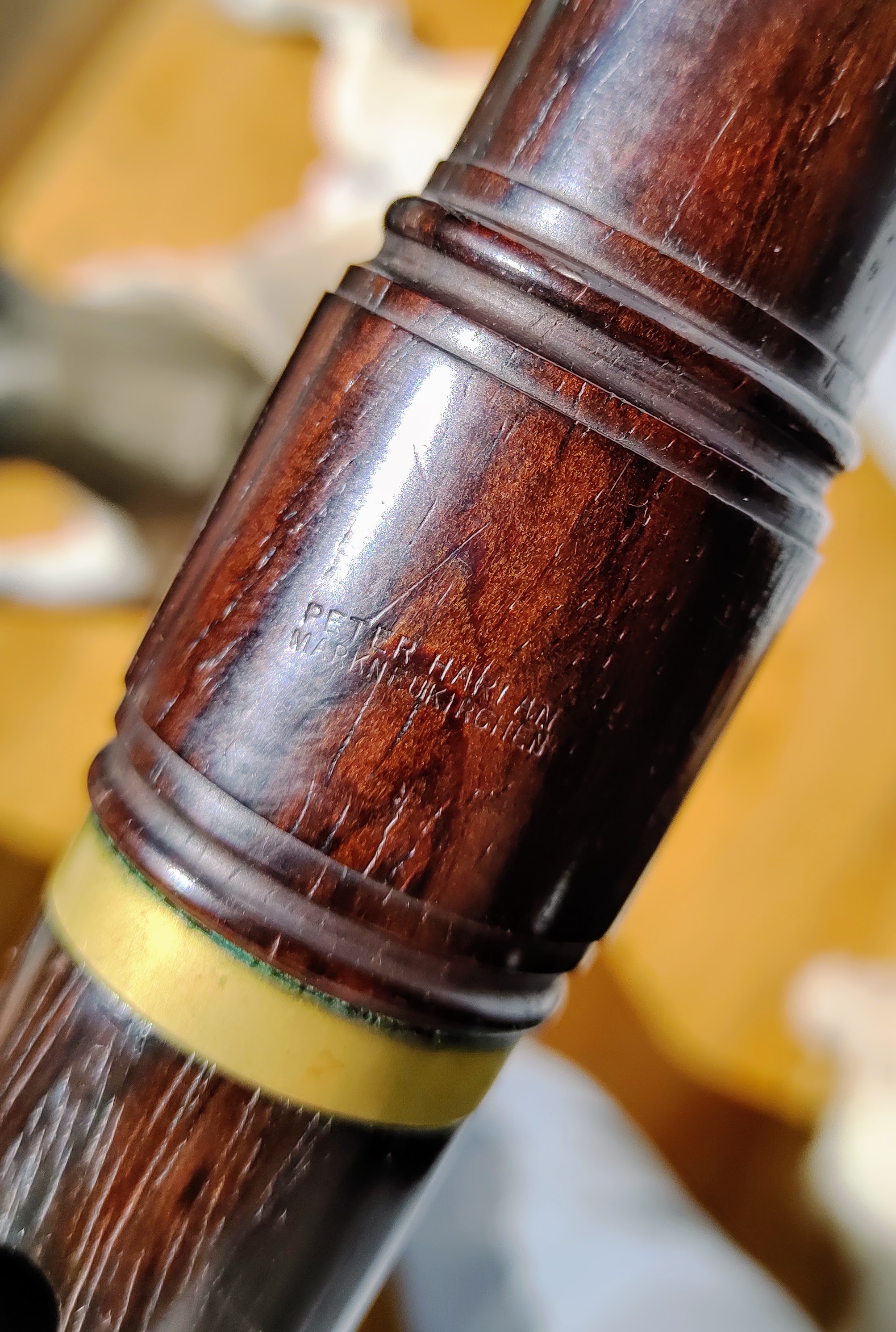
It is branded "Peter Harlan Markneukirchen". Peter Harlan is credited with developing the German system recorder. He wasn't really a wind instrument maker (I think I read he did make some, though), and hired various other instrument makers in Markneukirchen, Germany to make his recorders. Most of these were made by Martin Kehr. This one is made from beautifully striped rosewood and is the German fingering system typical of Peter Harlan instruments.
Below are pics of the tenor in D, plus some comparison pics of other recorders. I've got one other Peter Harlan instrument, also in an unusual key. It's a soprano in A.
Peter Harlan Tenor in D (Voice Flute)
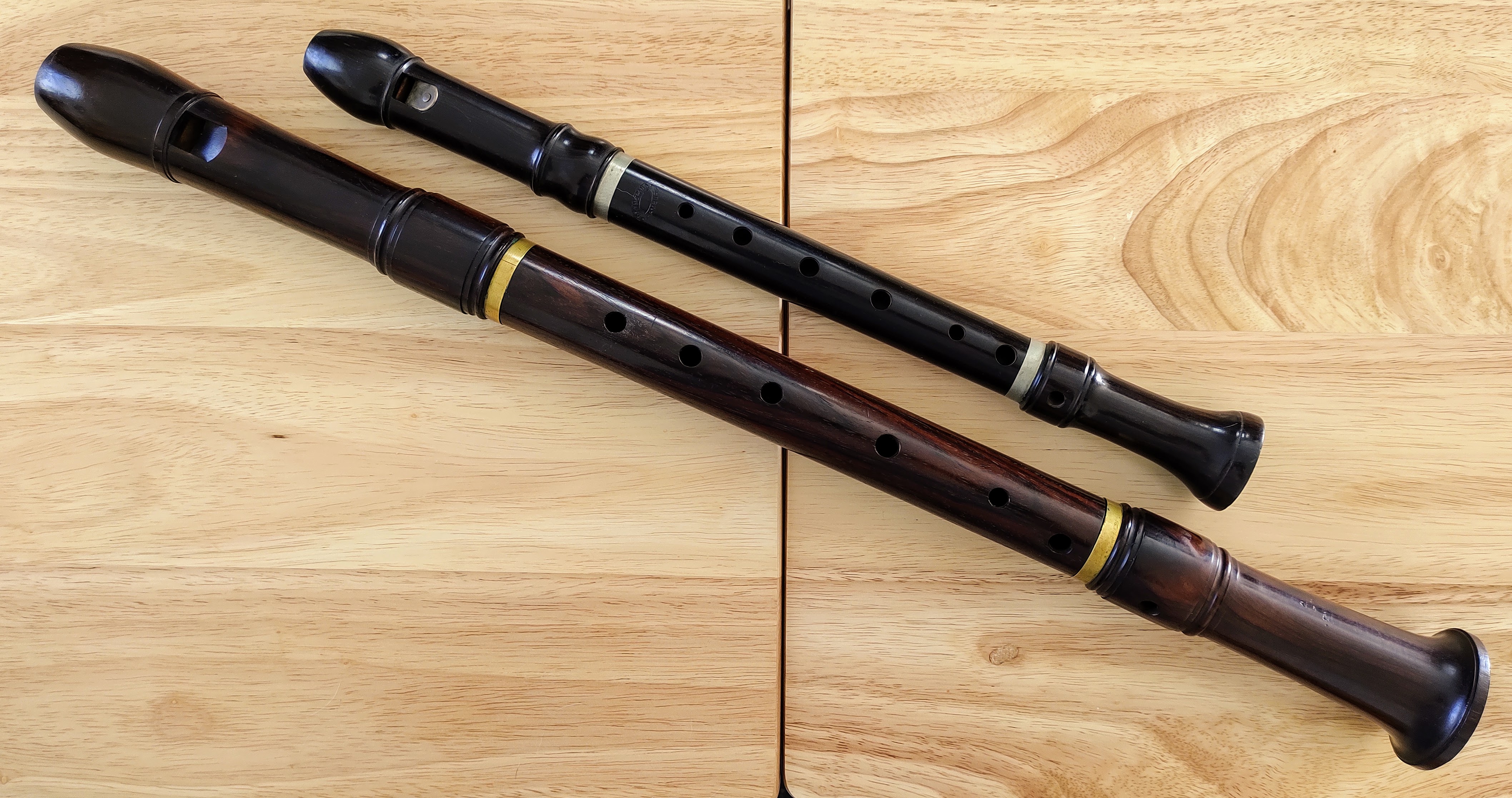
Peter Harlan Tenor in C (bottom) and Huller & Kruspe Soprano in A (top)
Top to bottom: Soprano in C, Soprano in A, Alto in F, Tenor in D
Two Peter Harlan recorders, Soprano in A (top) and Tenor in D (bottom)
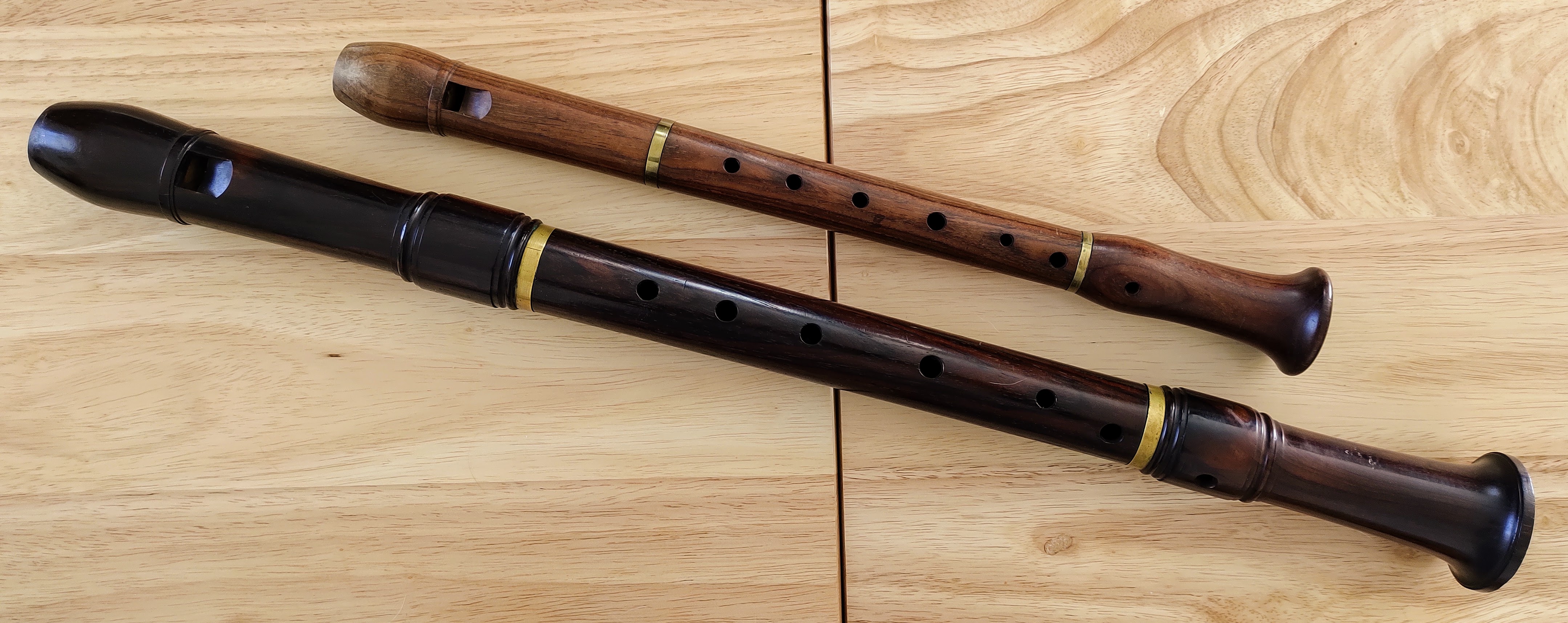
Tenor comparison; Tenor in D (top), Tenor in C (bottom)
This is my debut with the Shooting Star Ocarina Octet (formerly septet) playing the contrabass G ocarina. I'm incredibly grateful to have been asked to join this talented group of ocarinists. Please subscribe to the YouTube Channel to make sure you don't miss any of the monthly videos.
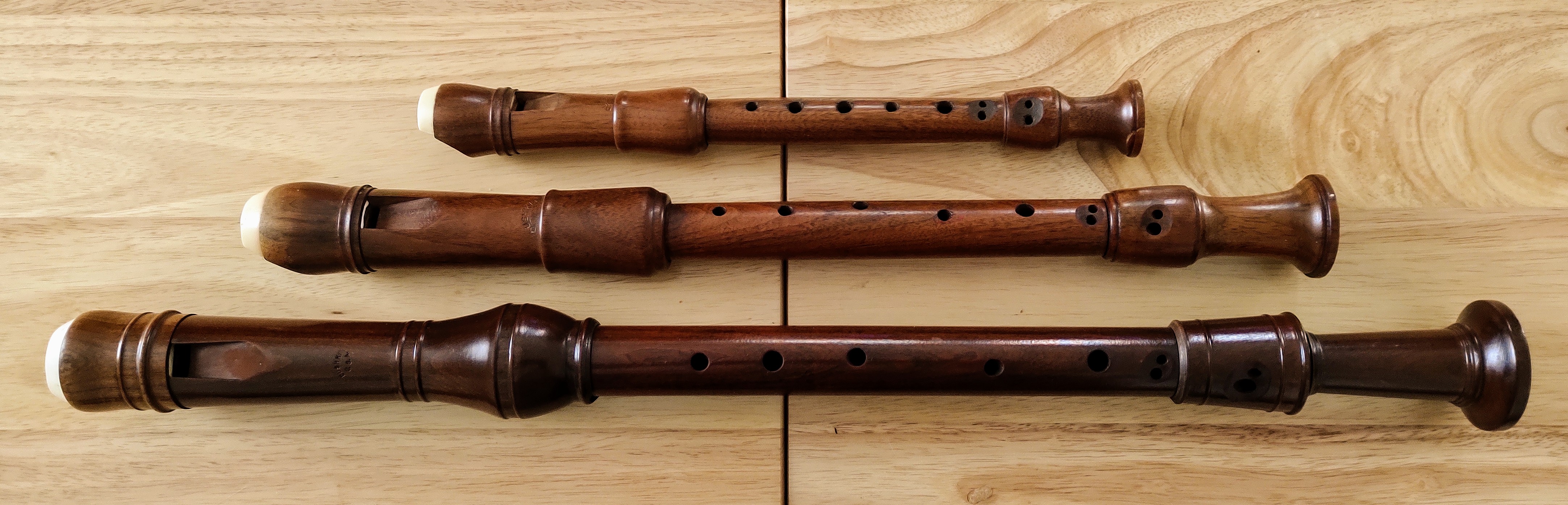
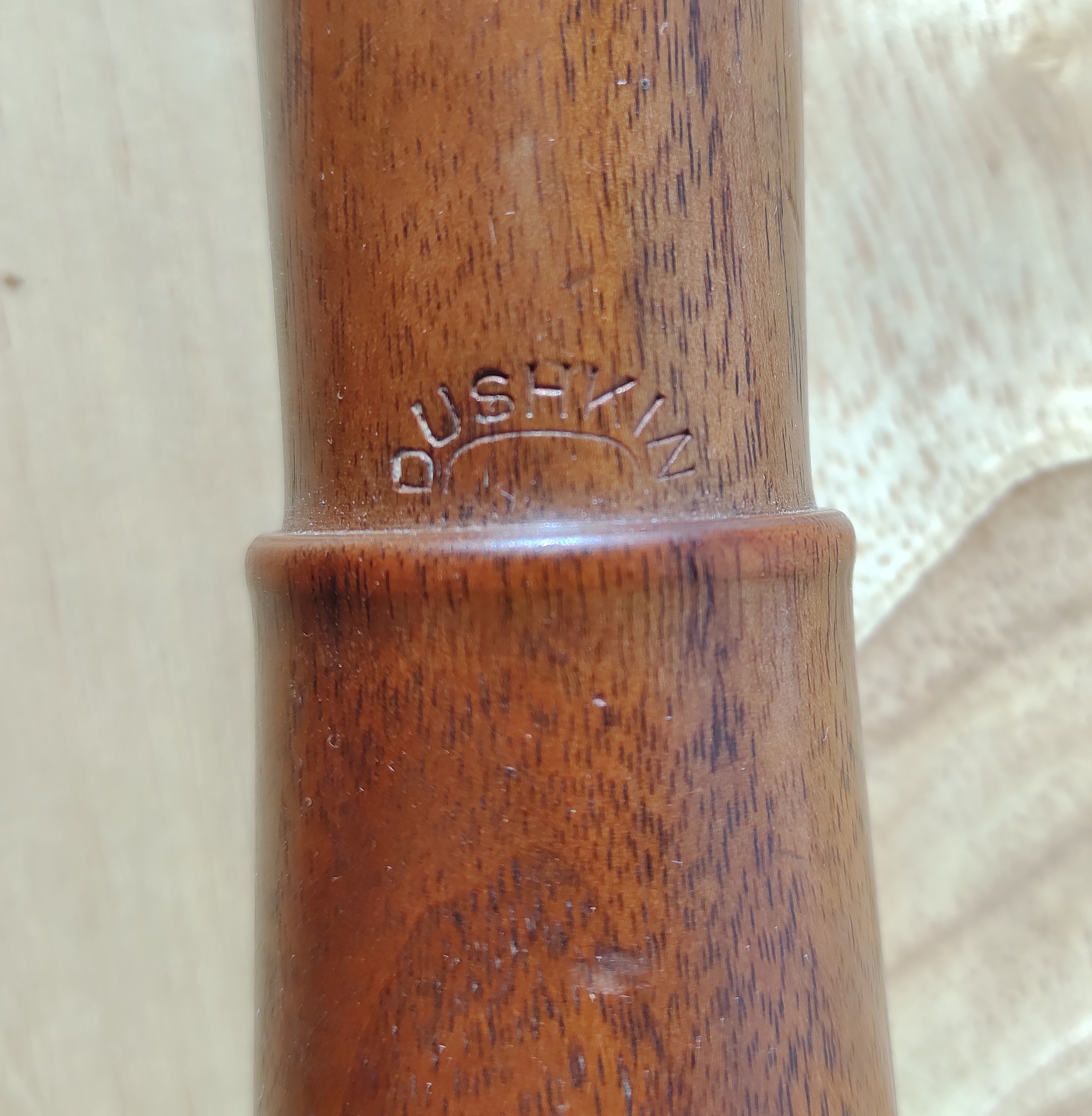
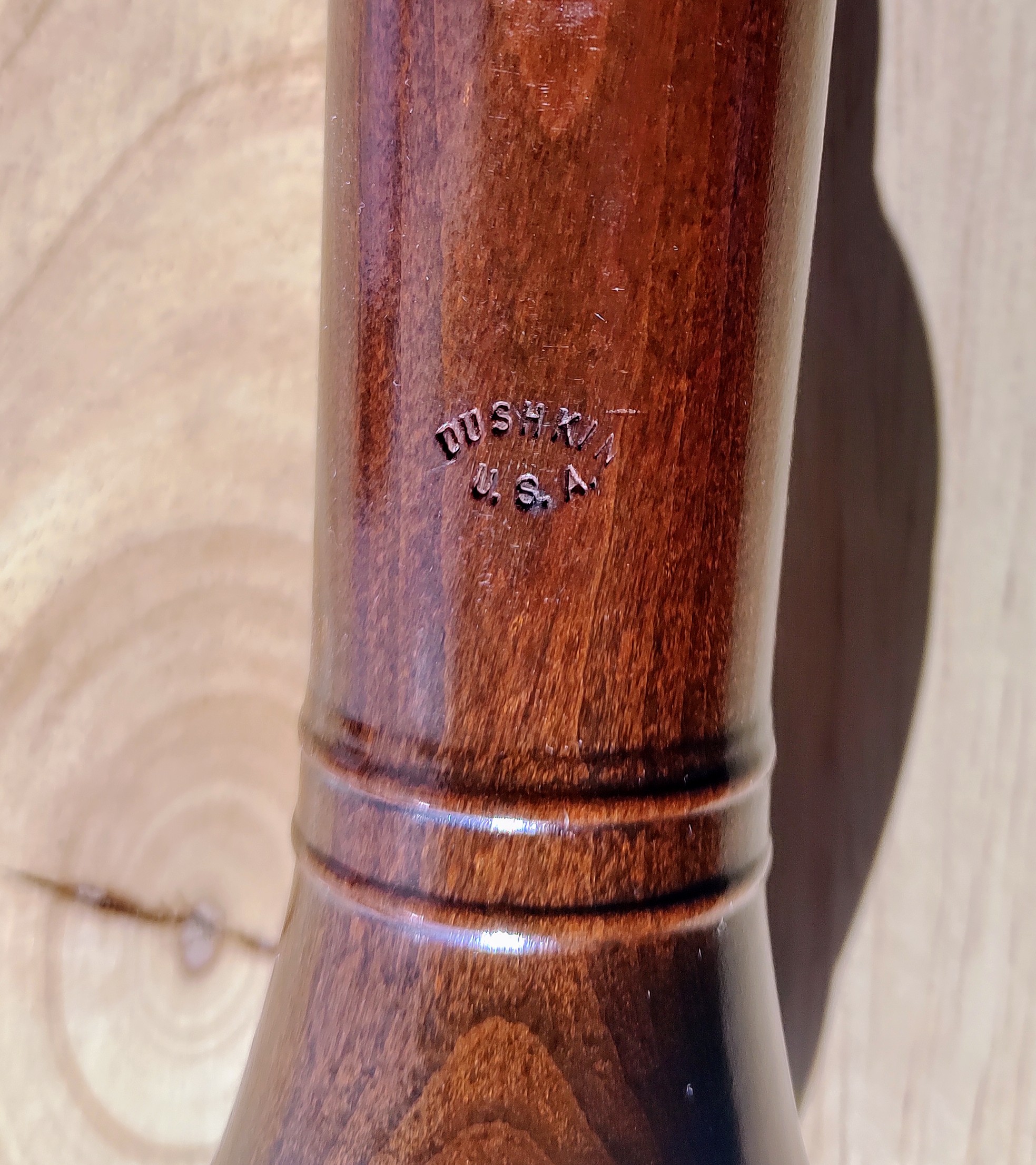
I've picked up a trio of Dushkin recorders over the past year. Soprano, alto and tenor. I haven't been able to find out a lot of information about them. It seems David Dushkin started making recorders around 1934. And he was the first American recorder maker. He started out in the Chicago area, then moved to Vermont. Other than he and his wife opening two music schools, there's very little information available. And the is virtually nothing about his recorders.
Dushkin's wood of choice seems to have been walnut. Although the tenor I recently received looks like rosewood, with a little walnut on the beak. He also made his headjoints overly complicated. Most recorder headjoints are comprised of two parts, the headjoint body plus a "block" insert. Dushkin's headjoints have four components; the headjoint body, the block, a plastic sleeve that goes around that first two things, and then a wooden sleeve that goes around the plastic sleeve.
They all play very differently, but fairly well. The soprano has a very "reedy" quality. Intonation is a little wonky, but not horrible. The alto has a beautiful tone, but it's super quiet. And you need to blow extremely hard. The (keyless) tenor plays great. The tone is a little reedy like the soprano, but the intonation is really good. The tenor looks to be a later model than the soprano and alto. Overall, they all play really well. I couldn't find any information online about how Dushkins played, but was pleasantly surprised.



 Brian Blauch - Clarinet/Woodwind Specialist